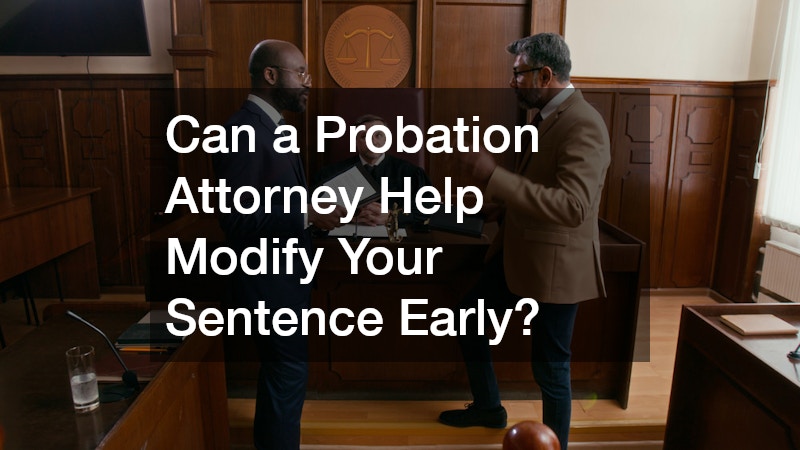
Yes, engaging a skilled probation attorney allows individuals under court supervision to petition the judicial system for early termination or modification of their sentence. Under statutory provisions such as California Penal Code Section 1203.3 and New York Criminal Procedure Law Section 410, trial courts retain inherent authority to revoke, modify, or discharge community supervision orders when the interests of justice are served.
Individuals placed under probation often face rigorous supervisory mandates, including unannounced home visits, travel restrictions, drug testing, and hefty administrative fees. According to official statistical reporting from the Bureau of Justice Statistics, millions of adults remain under adult community supervision nationwide, making probation management a central element of the criminal justice landscape. While judges impose probation as a constructive alternative to incarceration, they also recognize that continuous supervision may become counterproductive once full rehabilitation is demonstrated. A defense practitioner evaluates state statutes, assesses sentencing records, and determines whether an individual meets local judicial standards for early release. By formalizing this process through a structured legal motion, defense counsel bridges the gap between the probationer’s compliance record and the court’s strict evidentiary requirements.
What Key Criteria Do Judges Look for When Considering Early Release?
Judges evaluate specific behavioral milestones and statutory benchmarks before agreeing to terminate or adjust a probation order prior to its original expiration date. As highlighted in practical legal guides by Root & Rebound Roadmap to Reentry, judges possess broad discretion, but they consistently demand clear evidence that public safety will not be compromised. The primary evidentiary elements considered during a modification hearing include:
-
Substantial Term Completion: Most jurisdictions require defendants to complete a minimum threshold, typically 50% of their total probation period, before courts entertain early discharge motions.
-
Complete Financial Compliance: Full payment of all court-ordered monetary obligations, including restitution to victims, administrative fines, court costs, and supervision fees, must be verified.
-
Fulfillment of Special Conditions: Mandatory completion of mandated educational programs, court-ordered counseling, anger management courses, or community service hours is essential.
-
Impeccable Conduct Record: Total absence of new criminal charges, arrests, or technical supervision violations throughout the active probationary period must be documented.
-
Demonstrated Hardship or Need: Clear evidence that ongoing probation actively hinders legitimate career advancement, professional licensing, educational opportunities, or necessary interstate travel.
How Does a Probation Attorney Build a Winning Motion for Early Termination?
A defense counsel constructs a compelling evidentiary package that transforms basic compliance metrics into a persuasive legal narrative for the court. Filing a generic form is rarely sufficient to convince a judge or a skeptical prosecutor. Instead, a legal professional compiles a comprehensive Motion for Early Termination that includes a formal Memorandum of Points and Authorities, supported by sworn declarations and verifiable documentation. The attorney collaborates directly with the client to gather employer recommendations, professional certificates, character reference letters, and proof of community involvement. Furthermore, experienced defense counsel reaches out to the assigned probation officer beforehand to gauge their stance. Having the probation officer’s concurrence or neutral stance significantly enhances the petition, as judges heavily rely on supervisory reports. By presenting a polished, well-organized motion that highlights how early release benefits society and supports the individual’s continued productivity, counsel maximizes the likelihood of a favorable ruling without unnecessary judicial delays.
What Are the Steps Involved in the Legal Process for Modifying Probation?
The judicial procedure for requesting early probation modification follows a strict statutory timeline that requires meticulous attention to court rules. Skipping procedural steps can result in summary dismissal of the motion. The standard legal workflow managed by legal counsel includes:
-
Case Evaluation & Records Audit: The legal team reviews original sentencing transcripts, probation reports, and payment ledgers to verify statutory eligibility under state law, such as guidelines detailed by M.W. Peterson Law.
-
Drafting the Formal Motion: Counsel drafts the Notice of Motion, Memorandum of Points and Authorities, and personal client affidavit clearly stating the legal and factual grounds for modification.
-
Filing and Service of Process: The original motion is filed with the clerk of the sentencing court, and official copies are served upon the District Attorney’s Office and Probation Department within required statutory deadlines.
-
Prosecutorial Negotiation: Defense counsel discusses the petition with the prosecuting attorney to address concerns, seek formal non-opposition, or negotiate modified terms.
-
Court Hearing Presentation: At the scheduled hearing, counsel presents oral arguments, submits supplemental evidence, and addresses any judicial inquiries before the bench.
Why Should You Seek Early Modification Instead of Waiting Out Your Term?
Remaining on community supervision longer than necessary exposes individuals to continuous legal vulnerabilities and administrative burdens that can disrupt daily life. Even minor, unintentional infractions, such as missing an administrative check-in, traveling across state lines without advance written permission, or experiencing unexpected financial distress, can trigger formal violation proceedings. Technical violations carry severe consequences, potentially leading to probation revocation, modified restrictions, or active incarceration. Securing an early discharge permanently eliminates these ongoing risks, providing total freedom from state oversight. Furthermore, successfully terminating probation early opens immediate pathways toward criminal record expungement, record sealing, and full restoration of civil rights, including voting privileges and firearm ownership where permitted by state law. Ultimately, retaining an experienced probation attorney to secure early release saves money on recurring monthly supervision fees while removing significant barriers to employment, housing, and long-term personal stability.
Navigating the complexities of the criminal justice system does not have to end with serving out an exhaustive probation sentence. As established under state penal codes, early termination and sentence modifications offer a viable, legal path to regain complete personal and professional freedom. Working alongside an experienced legal representative ensures that your compliance record, rehabilitation achievements, and personal hardships are articulated effectively before the court. By meeting eligibility benchmarks, completing monetary obligations, and presenting a meticulous motion, individuals under supervision can successfully petition judges for early release. Taking proactive legal steps today helps you avoid ongoing technical violations, reduces supervisory costs, and lets you move forward with confidence.